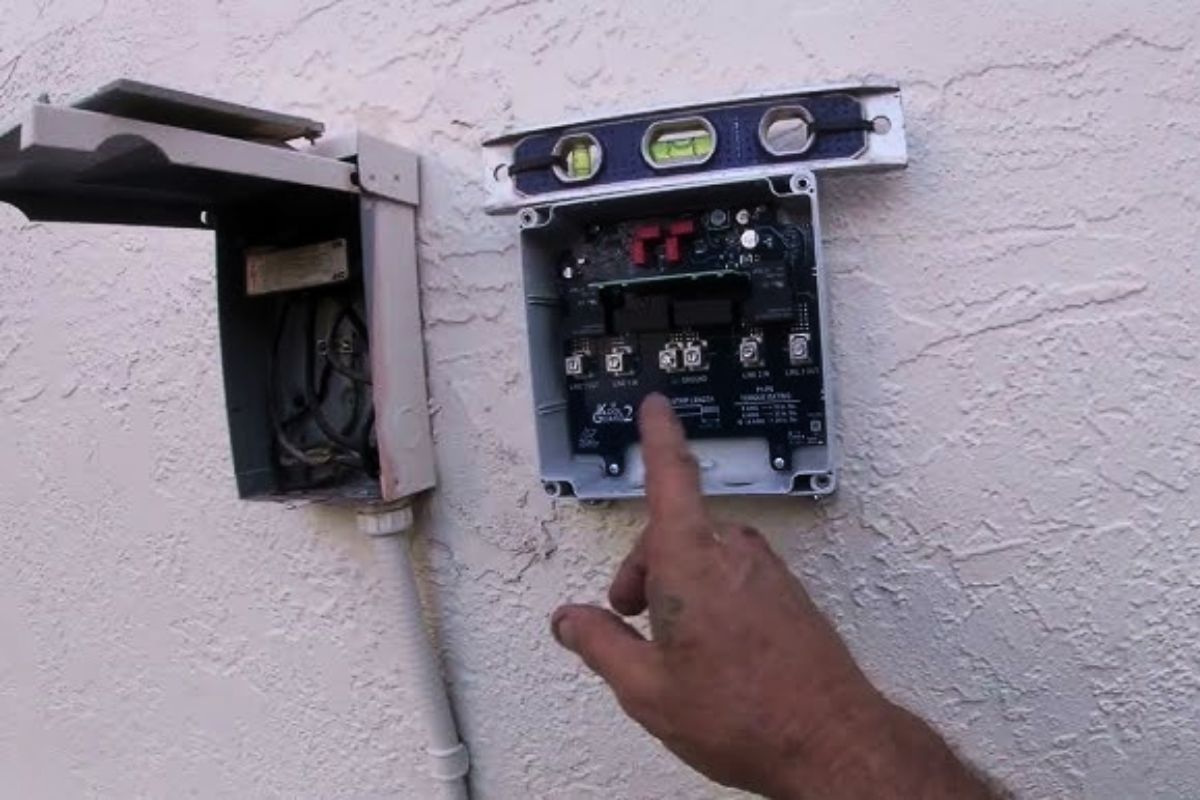
A power surge is a short spike in voltage that travels through wiring or data lines. It may last only a fraction of a second, but that brief spike can still damage sensitive electronics and electrical components.
Eaton explains that surges and spikes are short-term voltage increases commonly caused by lightning strikes, power outages, short circuits, utility-related issues, utility load shifting, and miswired electrical systems. These events can cause immediate equipment failure or smaller repeated damage that shortens the lifespan of electronics over time. (Eaton Website)
That “over time” part is important. Not every surge causes the dramatic pop, spark, or instant failure homeowners imagine. Some surges are small enough to go unnoticed but still strong enough to weaken internal components inside modern equipment.
That matters because today’s homes depend on more electronic controls than ever before. It is not just the TV, desktop computer, or Wi-Fi router anymore. Modern homes include control boards inside air conditioning systems, refrigerators, dishwashers, washers and dryers, pool equipment, smart thermostats, garage systems, security equipment, EV chargers, and generator-related controls.
In other words, the more connected your home becomes, the more surge protection matters.
Yes, lightning can absolutely cause damaging surges. A direct strike, nearby strike, or strike affecting utility equipment can send dangerous voltage into electrical systems, low-voltage lines, communication lines, and connected equipment.
This is one reason surge protection is such an important conversation in Florida. The National Weather Service tracks Florida cloud-to-ground lightning flash density by month, and notes that flash rates over the peninsula increase heavily in June because sea breezes develop along both coasts and collide over the peninsula during the summer season. July is described as an especially active lightning month for Florida because warm coastal waters and strong daytime heating allow both sea breezes to become well developed. (National Weather Service)
For West Central and Southwest Florida, the National Weather Service also notes that late May through June is typically when severe storms are most likely, with heavy rainfall and frequent lightning, while July through early September is when the rainy season peaks and frequent lightning remains a significant hazard. (National Weather Service)
But lightning is only part of the story.
ABB explains that large single surge events like lightning can cause immediate or intermittent equipment failure, but also notes that lightning and utility power anomalies account for only a portion of transient surges, while many surge events are produced internally. (ABB Group)
So while storms are the easiest surge risk to picture, they are not the only risk worth protecting against.
A lot of power surges come from everyday electrical activity.
NEMA explains that surges, also called transients, are brief overvoltage spikes or disturbances that can damage, degrade, or destroy electronic equipment. NEMA also notes that surges can come from inside or outside a building, and that common internal sources include devices switching power on and off, contactors, relays, breaker operations, motors, transformers, fault clearing, outage recovery, loose connections, and other electrical load changes. (NEMA Surge Protection Institute)
That means a surge does not always begin with a storm. It can happen when large equipment cycles on and off. It can happen when the utility grid switches loads. It can happen when power comes back after an outage. It can happen because of wiring faults, tripped breakers, downed power lines, or issues with electrical equipment.
This is why outages and surges are often connected, but they are not the same problem.
An outage is a loss of power. A surge is a spike in voltage. Surge protection does not keep your home powered during an outage, and a generator does not automatically replace the need for surge protection. They solve different problems.
Backup power helps keep essential systems running when utility power is lost.
Surge protection helps reduce damaging voltage spikes that can occur before, during, or after electrical disturbances.
For many Florida homeowners, both conversations matter because storms can create more than one issue at once: power loss, voltage fluctuation, equipment cycling, utility restoration events, and potential surge exposure.
The biggest mistake homeowners make is thinking surge protection is only about lightning. Lightning is a serious concern in Florida, but it is not the only reason appliances, electronics, smart devices, HVAC systems, EV chargers, or generator controls can be damaged.
A licensed electrician can look at the full picture: the electrical panel, grounding and bonding, service equipment, sensitive electronics, hard-wired systems, backup power equipment, EV charging equipment, and low-voltage lines that may also need protection.
Link33 helps Southwest Florida homeowners take that bigger-picture approach. As a Naples-based electrical contractor, Link33 provides residential and commercial electrical services including panel repairs and upgrades, surge protection, lighting enhancements, smart home integrations, generator maintenance, EV charging station installations, backup generator installation, and automatic transfer switches. (Link33)
If your home relies on modern electronics, smart technology, backup power, or high-value appliances, surge protection is not just a storm-season add-on. It is part of protecting the systems your home depends on every day.